Gerry Marten

Ecologist, educator and author

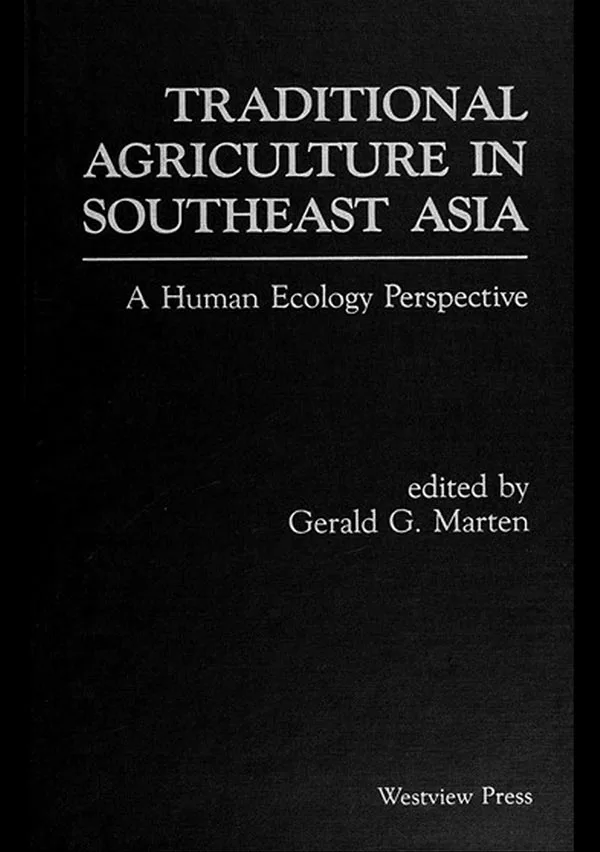
Cover of Traditional Agriculture in Southeast Asia

Traditional Agriculture in Southeast Asia
A Human Ecology Perspective

We shouldn’t throw out the baby with the bathwater. Traditional knowledge and practices – products of many centuries of trial and error – are being lost as agriculture modernizes in Southeast Asia. Modern technology may offer higher yields, but traditional agriculture is ecologically sustainable.

  • Author: Gerald G. Marten
  • Publisher: Westview Press (Boulder, Colorado)
  • Publication Date: June 1986, 358 pp.
  • ISBN-10: 0813370264
  • ISBN-13: 978-0813370262

Table of Contents

Preface, Acknowledgments, Introduction

1. Agriculture in Southeast Asia

Authors: Ana Doris Capistrano and Gerald G. Marten

Chapter 1 provides an overview of the major agricultural systems in Southeast Asia—for example, rice paddies, shifting cultivation, homegardens, commercial temperate vegetables, and commercial tree plantations—relating their organization in space and time to the environmental and social conditions with which they are associated. Each of the agricultural systems described in Chapter 1 is common throughout Southeast Asia, but each takes on a diversity of forms in different parts of the region. Most rural landscapes in Southeast Asia are a patchwork of several of these agricultural systems, and even a single agricultural household often earns its living by simultaneously employing several systems on different parcels of land or on the same land during different seasons. The character of these agricultural systems can vary enormously, from purely traditional to heavily influenced by Western technology. Some systems, such as homegardens and other forms of mixed cropping, tend to be more traditional and therefore receive considerable attention throughout the book. The traditional component of other systems, such as commercial vegetable farming and commercial tree plantations—including rubber and oil palm—tends to be less significant, and those systems receive correspondingly less attention.

Chapter contents:

  • Rice based Agriculture
  • Shifting Cultivation
  • Homegardens
  • Commercial Field Crops
  • Perennial Agroecosystems
  • Acknowledgments
  • References

2. The Human Ecology Perspective

Authors: Gerald G. Marten and Daniel M. Saltman

Chapter 2 sets the conceptual scene by outlining the human ecology perspective, which embraces not only the farm as a biophysical ecosystem but also the human social system that interacts with that ecosystem in many ways. On the one hand, a human ecology perspective is concerned with the structure and function of agricultural ecosystems—how the soil, water, crops, pests, and other biological and physical components interact to generate both desired and undesired outputs of goods and services. On the other hand, it is concerned with how small-scale farmers interact with the agroecosystems on which they depend for a living and how the human social system shapes those interactions.

The framework in Chapter 2 is expressed in several ways throughout the rest of the book. Chapters 3 through 6 present detailed examples of traditional agriculture in the Philippines, Thailand, and Indonesia. Chapters 7 through 9 focus on aspects of the social system and how they interact with traditional agroecosystems, while Chapters 10 through 13 each focus on a single agroecosystem element from the perspective of its interactions with the rest of the agroecosystem and the social system. Chapter 14 follows a single topic—nutrition—through the numerous points of interaction between the agroecosystem and social system.

Chapter contents:

  • Agroecosystem Structure
  • Elements of Agroecosystem Function
  • Traditional Agroecosystems and Natural Ecosystems
  • The Special Role of Mixed Cropping
  • Social System Impacts on Agroecosystems
  • Agroecosystem Impacts on Social Systems
  • Impact of Agroecosystem Function on the Natural Resource Base
  • References

3. The Bontok: Traditional Wet Rice and Swidden Cultivators of the Philippines

Author: June Prill-Brett

Chapter 3 describes highly traditional wet rice and swidden agriculture in a remote, mountainous area of the Philippines. It shows how custom and ritual are used to allocate land and water resources among agricultural households, organize and coordinate village labor around an agricultural calendar that interweaves several cropping systems throughout the year, cope with environmental hazards such as typhoons and pests, and sustain agricultural productivity generation after generation. Chapter 3 also describes how integration with the broader Philippine community is changing the way these people interact with their agricultural ecosystems.

Chapter contents:

  • Land Classification
  • Traditional Rice Crop
  • Wet Season Cropping in Rice Paddies
  • Swidden Agriculture
  • Soil Conservation
  • Social Control of Land and Water Resources
  • The Role of Ritual
  • Impact of the Outer World
  • Acknowledgments
  • References

4. Traditional Agriculture in Northern Thailand

Authors: Katin Srimongkol and Gerald G. Marten

Chapter 4 contrasts agriculture in two parts of Northern Thailand. The first is more traditional, in a mountainous area where the main cropping systems are upland rice and swidden agriculture. The second area is a large irrigated valley where conditions are generally favorable for agriculture and rice and other crops can be grown throughout most of the year. The valley area is fully integrated with a market economy, has been thoroughly exposed to modern agricultural technology, and emphasizes temporal sequences of monocultures. Nonetheless, the area retains much of its traditional agriculture. Chapter 4 describes the interplay between traditional and modern agriculture.

Chapter contents:

  • The Highland Area
  • The Lowland Area
  • Farmers’ Practices That Merit Further Study
  • Acknowledgments
  • References

5. Rainfed Cropping Systems in Northeast Thailand

Authors: Anan Polthanee and Gerald G. Marten

Chapter 5 describes rainfed agriculture in Northeast Thailand, where soils are poor and rainfall is marginal and erratic. Traditional agriculture appears to have made the most of the available resources. Different cropping systems are adjusted to subtle differences in the land, and farm households coordinate their labor among those systems. This chapter relates recent efforts by scientists to intensify agriculture in Northeast Thailand and the difficulties they have encountered in developing cropping systems that perform better than traditional ones.

Chapter contents:

  • Existing Cropping Patterns
  • Farmers’ Decision Making
  • Existing Cultivation Practices
  • Experiences Testing New Cropping Systems
  • Conclusions
  • Topics for Agroecosystem Research
  • Acknowledgments
  • References

6. Traditional Agroforestry in West Java: The Pekarangan (Homegarden) and Kebun Talun (Annual Perennial Rotation) Cropping Systems

Authors: Linda Christanty, Oekan S. Abdoellah, Gerald G. Marten, and Johan Iskandar

Chapter 6 describes two highly sophisticated mixed-cropping systems that account for most food production in addition to rice in Java, where a high human population density forces farmers to extract their subsistence efficiently from a small amount of land. Perennial tree crops are an important part of both cropping systems. In the homegarden, trees are interplanted with field crops; in the other system, tree plantations are rotated with field crops to form a highly intensive “permanent swidden.”

Chapter contents:

  • The Role of Kebun Talun and Homegardens in the Javanese Landscape
  • Cropping Structure
  • Labor Input
  • Food and Income Production
  • Conservation Function
  • Strategies for the Future
  • Contents
  • Acknowledgments
  • References

7. Socioeconomic Factors and Small Scale Farmers in Southeast Asia

Author: Damrong Thandee

Chapter 7 introduces the social science perspective by outlining factors that influence how small-scale farmers make farming decisions. It points out that the interaction of farm households with the larger social system includes not only relations between households in a village, such as land tenure, but also interactions between the village and the outside world. Cultural preferences, new agricultural technology, off-farm employment opportunities, rural-to-urban migration, expanding agricultural markets, agricultural commodity prices, expanding opportunities for consumption, and government actions all influence the crops a household decides to produce and how it produces them.

Chapter contents:

  • Subsistence vs. Market Oriented Farming
  • Cultural and Social Factors
  • Patterns of Land Tenure
  • Technology Transfer
  • Public Policy
  • Acknowledgments
  • References

8. Social Organization and Traditional Agroecosystems

Author: Joseph A. Weinstock

Chapter 8 continues the social science perspective by examining some of the relationships between traditional agroecosystems and human social organization. It begins with a historical survey of ideas about how the social organization of agrarian societies is associated with the environmental conditions under which they pursue agriculture. Chapter 8 then reviews examples illustrating the interrelationships between agroecosystems and important elements of social organization, including land tenure, population structure, ethnic identity, ritual beliefs, and the organization of production.

Chapter contents:

  • Social Organization and the Environment
  • Elements of Social Organization and Their Relations to Agroecosystems
  • Acknowledgments
  • References

9. Ethnoecology: An Approach to Understanding Traditional Agricultural Knowledge

Authors: J. Peter Brosius, George Lovelace, and Gerald G. Marten

The technology that forms the basis for structuring traditional agroecosystems is codified as knowledge passed from generation to generation. Chapter 9 explores the nature of this traditional knowledge within the science of “ethnoecology.” The chapter is concerned with how traditional farmers perceive the agroecosystems they manage and how those perceptions translate into their management practices.

Chapter contents:

  • Basic Assumptions of Ethnoecology
  • Examples from Traditional Agricultural Societies
  • Traditional Conceptualizations of the Environment
  • Acknowledgments
  • References

10. Soil Management in Traditional Agriculture

Authors: Gerald G. Marten and Patma Vityakon

Chapter 10 moves to the biophysical side of agroecosystem function by focusing on soil processes. It attempts to show how traditional agriculture has persisted on the same land for so long without the kind of soil degradation that creates dependence on fertilizer applications to maintain yields. Traditional agriculture has employed a variety of strategies to maintain soil fertility, including using mulch and other crop residues to maintain soil organic matter, recycling mineral nutrients to maintain nutrient levels in the agroecosystem, and maintaining vegetative cover to prevent soil erosion. The mixed-cropping character of traditional agriculture, which plays a major role in all these functions, is examined in particular ecological depth. Also important is the detailed knowledge traditional farmers possess about the capabilities of different kinds of land and their ability to match different cropping systems with different kinds of land.

Chapter contents:

  • Traditional Systems of Agricultural Land Classification
  • Mixed Cropping and the Soil
  • Maintaining Soil Fertility
  • Erosion Control
  • Acknowledgments
  • References

11. Shifting Cultivation and Tropical Soils: Patterns, Problems, and Possible Improvements

Author: Linda Christanty

Chapter 11 continues with soils in the specific context of shifting cultivation. By examining changes in soil quality when tropical soil is cultivated for several successive years, as well as the role of fallow periods in replenishing and sustaining soil quality, Chapter 11 offers insights into the sustainability of tropical agriculture as it becomes more intensive under increasing human population pressure.

Chapter contents:

  • Definitions and Classification
  • Stages of Shifting Cultivation
  • Effects of Shifting Cultivation on Tropical Soils
  • Contemporary Problems and Possible Improvements
  • References

12. The Ecology of Traditional Pest Management in Southeast Asia

Authors: Becky Brown and Gerald G. Marten

Chapter 12 addresses the ways traditional farmers deal with weed and insect pests in their agroecosystems. Traditional agriculture is noteworthy in this respect because serious pest damage is unusual even though many kinds of pests are found in traditional fields and modern chemical pesticides are not employed. What are traditional farmers doing right? The answer is complex, but it appears to lie in a combination of the pest resistance of local crop varieties, the interplanting of several crops in the same field, and the fact that traditional agricultural landscapes are usually a patchwork of different cropping systems.

Chapter contents:

  • Pest Problems in Traditional Agriculture
  • Traditional Pest Management Technology
  • The Role of Mixed Cropping
  • The Pesticide Dilemma
  • Conclusions
  • Acknowledgments
  • References

13. Trees in Paddy Fields in Northeast Thailand

Authors: Somluckrat Grandstaff, Terry B. Grandstaff, Pagarat Rathakette, David E. Thomas, and Jureerat K. Thomas

Chapter 13 describes the application of a rapid field-assessment methodology to a single agroecosystem topic: the role of trees in the rice fields of Northeast Thailand. The chapter takes a temporal perspective, describing how the numbers and kinds of trees change during the years following the clearing of a forest for rice paddies. The trees serve multiple functions—including providing building materials, fuelwood, mulch, and food—but must also be kept in their proper place to avoid excessive interference with the rice crop.

Chapter contents:

  • Rapid Rural Appraisal
  • Why Are There Trees?
  • Progression of Trees in Paddy Fields
  • Uses of Trees
  • Paddy Fields as Multiresource Systems
  • Acknowledgments
  • Appendix: An Example of Probing
  • References

14. The Complementary Roles of Homegardens, Upland Fields, and Rice Fields for Meeting Nutritional Needs in West Java

Authors: Oekan S. Abdoellah and Gerald G. Marten

Chapter 14 illustrates how detailed numerical data from a field study can be used to explore the interplay of ecological and social factors around a single agroecosystem topic: the integration of three agricultural systems in Java to provide a balanced diet. The chapter describes the impact of household economic status, land tenure, dietary preferences, and involvement in a cash economy on the cropping systems a household employs and the consequences for nutrition. Of particular significance is crop diversity, which is highly developed in Javanese agriculture but may be eroded as agriculture modernizes.

Chapter contents:

  • Research Methods
  • Identification of Critical Nutrients
  • Nutrient Production
  • Impact of Market Involvement
  • Mixed Cropping Species Composition
  • Optimal Crop Mixes
  • Implications for Development
  • Acknowledgments
  • Appendix: Plants Observed in Homegardens and Agricultural Fields Surveyed in Jatigede Area, West Java
  • References

15. Traditional Agriculture and Agricultural Research in Southeast Asia

Author: Gerald G. Marten

Chapter 15 discusses the implications of recent agricultural development policies in Southeast Asia for agricultural research in general and human ecology research on traditional agriculture in particular. Any serious attempt to improve agriculture across Southeast Asia will require attention to local environmental and social conditions beyond the centralized agricultural research and development strategy that prevailed until recently. Agricultural research may need to draw on the intellectual resources of small-scale farmers in several ways—not only by identifying traditional agricultural practices of particular value, but also by incorporating farmers as equal partners with scientists in the agricultural research process.

Chapter contents:

  • Recent Trends in Agricultural Development
  • A Role for Traditional Agriculture
  • Natural Ecosystems as Models
  • Farmer Scientist Collaboration
  • Acknowledgments
  • Appendix: Examples of Agricultural Policy Options
  • Reference

Back to top